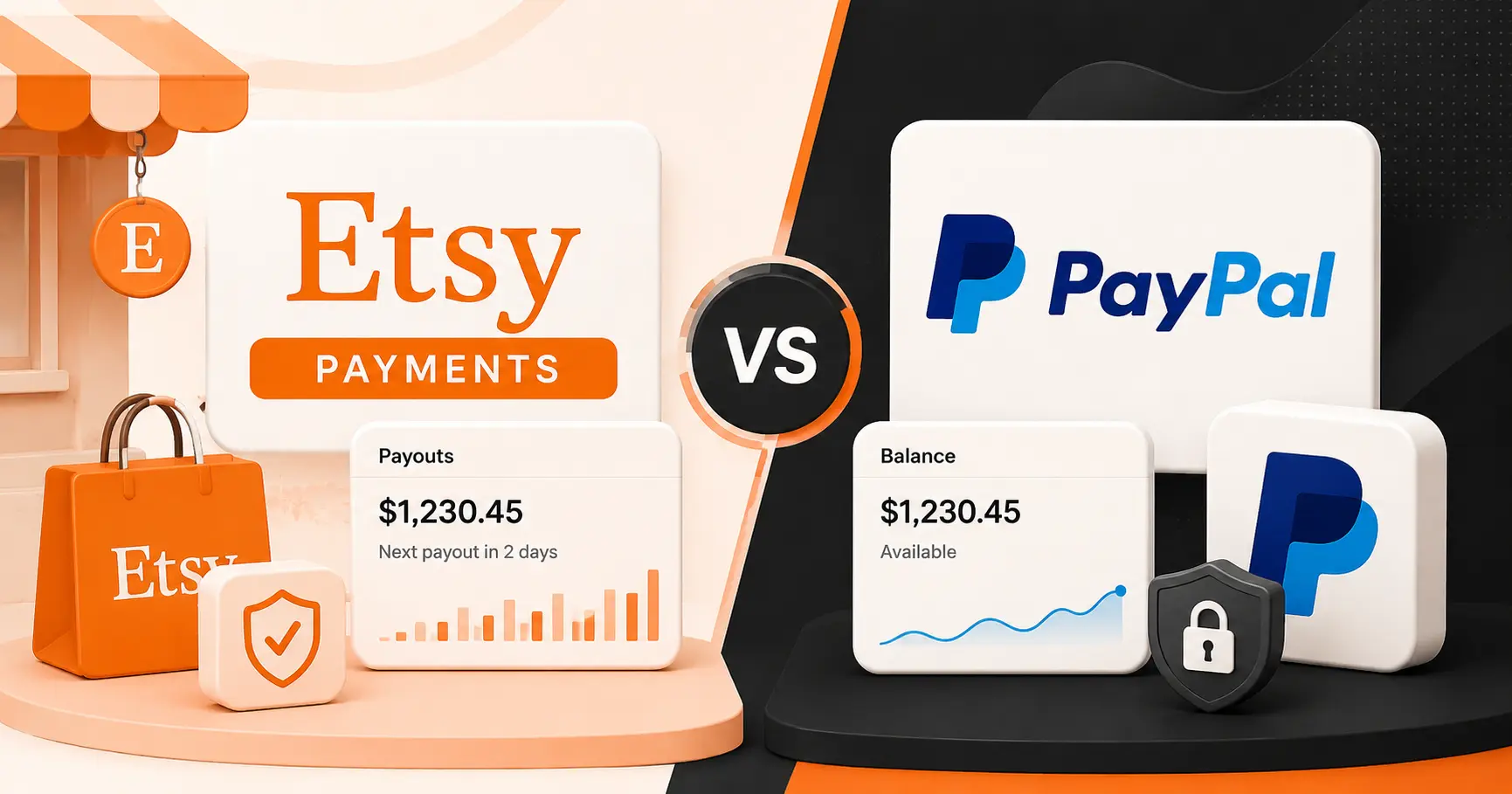
Etsy Payments vs PayPal: Fee Comparison for International Sellers
Introduction to Etsy Payments vs PayPal: Fee Comparison for International Sellers
In the modern e-commerce landscape, success is defined by operational precision. Whether you sell on Etsy, Amazon, Shopify, or eBay, understanding the math behind Etsy Payments regional processing fees, standalone PayPal rates, currency conversion fees, and deposit minimums. is critical. Minor variations in fee percentages, shipping rates, or ad costs can accumulate into major cash flow leaks. This guide provides a detailed analysis of this topic, giving you the knowledge to optimize your store and protect your profit margins.
The Core Challenges of Etsy Payments vs PayPal: Fee Comparison for International Sellers
Many e-commerce sellers focus entirely on sales volume, ignoring the underlying variable costs. Platforms charge transaction commissions, listing fees, and credit card processing charges that directly eat into margins. To build a sustainable brand, you must map out every cost component and understand how they impact unit economics. By analyzing these expenses systematically, you can make informed decisions about product pricing, advertising budgets, and inventory replenishment.
Detailed Parameters and Fee Schedules
Managing operational costs requires a structured breakdown of platform parameters. Below is a comparative overview of key cost factors and metrics that you must track:
| Fee Component | Standard Rate (US) | Standard Rate (UK) | Impact on Net Margin |
|---|---|---|---|
| Listing Fee | $0.20 USD | £0.16 GBP | High on low-priced items (< $5.00) |
| Transaction Fee | 6.5% of total | 6.5% of total | Constant across all price points |
| Processing Fee | 3.0% + $0.25 USD | 4.0% + £0.20 GBP | Fixed element makes small orders expensive |
| Regulatory Surcharge | 0.00% | 0.32% | Applies to total paid in specific countries |
Step-by-Step Mathematical Walkthrough
To put these concepts into practice, let\'s look at a concrete mathematical example. Working through these calculations step-by-step will show you exactly how platform fees, product costs, and operational expenses interact to determine your net margins.
Let\'s conduct a complete mathematical simulation of a transaction on Etsy. Suppose you list a handmade ceramic mug for a retail price of $25.00 USD. You charge your buyer $5.00 USD for domestic shipping. Your direct cost of materials and labor (COGS) to make the mug is $7.50 USD, and you pay a commercial carrier $4.20 USD to purchase the shipping label.
First, we determine the Gross Revenue: $25.00 + $5.00 = $30.00 USD.
Second, we calculate individual Etsy platform fees:
- Listing Fee: $0.20 USD.
- Transaction Fee: 6.5% of $30.00 = $1.95 USD.
- Payment Processing Fee: (3.0% of $30.00) + $0.25 = $0.90 + $0.25 = $1.15 USD.
- Regulatory Surcharge: $0.00 USD (since the store is based in the US).
The total platform transaction cost is: $0.20 + $1.95 + $1.15 = $3.30 USD. This represents 11.0% of your gross sales revenue.
Third, we subtract all costs to calculate the Net Profit: $30.00 (Revenue) - $7.50 (COGS) - $4.20 (Shipping Label) - $3.30 (Etsy Fees) = $15.00 USD.
Finally, the Net Profit Margin is calculated as: ($15.00 / $30.00) * 100 = 50.0%. This indicates a healthy margin, but it does not account for marketing or overheads. Always use our dedicated Etsy calculators to run these formulas for different regions.
Actionable Strategies for Optimization
Knowing the math is the first step; the next is applying optimization strategies to lower your overheads. Here are four actionable tips you can implement today to protect your e-commerce profits:
1. Utilize Multi-Quantity Bundling: Since the listing fee ($0.20) is charged upon renewal or each time an item sells, selling items in multi-packs (e.g. Pack of 3 for $45) will save you listing costs compared to three individual transactions, increasing your unit profitability.
2. Integrate Shipping Surcharges: Offer free shipping to gain search visibility but adjust your product retail price to absorb the shipping label cost. This helps satisfy Etsy's search algorithm while keeping your margins intact.
3. Sponsor Wisely: Monitor Offsite Ads. If your shop volume is close to the mandatory $10,000 threshold, ensure your pricing margins can swallow the 12% ad commission, as you will not be able to opt out once enrolled.
4. Geographic Pricing Optimization: Since shipping international items incurs higher processing and transaction overheads, set up domestic and international pricing variations on your listing page so local buyers pay a lower cost while foreign orders cover their own shipping and payment fee surcharges.
Advanced Seller Insights & Best Practices
As your store scales, you must transition from basic calculations to advanced cash flow modeling. Professional sellers build comprehensive profit and loss (P&L) statements, monitor customer acquisition costs (CAC), and track lifetime value (LTV). Integrating these metrics into your daily operations ensures your business remains resilient against platform policy shifts or shipping rate increases. Always rely on data, rather than guesswork, to guide your pricing and marketing decisions.
Frequently Asked Questions
Does Etsy charge fees if I make no sales?
Yes. You pay a listing fee of $0.20 USD for each listing created, regardless of whether it sells. The listing remains active for 4 months, after which it expires and costs another $0.20 USD to renew.
What is the payment processing fee on Etsy?
The payment processing fee covers the cost of handling credit cards and digital wallets. In the United States, it is a flat 3% of the total payment received plus a fixed charge of $0.25 USD per transaction.
How do I stop Offsite Ads from charging me?
If your rolling 12-month sales are below $10,000 USD, you can opt out in your shop settings. If your sales exceed $10,000 USD, the program becomes mandatory and cannot be disabled.
Authoritative References & Resources
To learn more about e-commerce operations, check out the official support channels of your platform, such as the Etsy Help Center, Amazon Seller Central, eBay Seller Center, or Shopify Community Forums. These platforms provide official updates on fee percentages, shipping policies, and developer API integrations.
Optimize Your Business Margins Today!
Stop guessing your net profits. Use our suite of professional seller tools to run exact cost simulations instantly.
Try E-commerce Profit Calculator
Ahmad Raza
Senior E-Commerce Consultant & Founder
3+ Years in E-Commerce Optimization & Growth Marketing
Ahmad Raza is an e-commerce strategist, developer, and founder of LWR Digital. With over 3 years of hands-on experience optimizing digital storefronts, managing multi-channel marketplaces, and building custom SaaS solutions, Ahmad dedicates his expertise to helping creators and brand owners maximize their profit margins.